
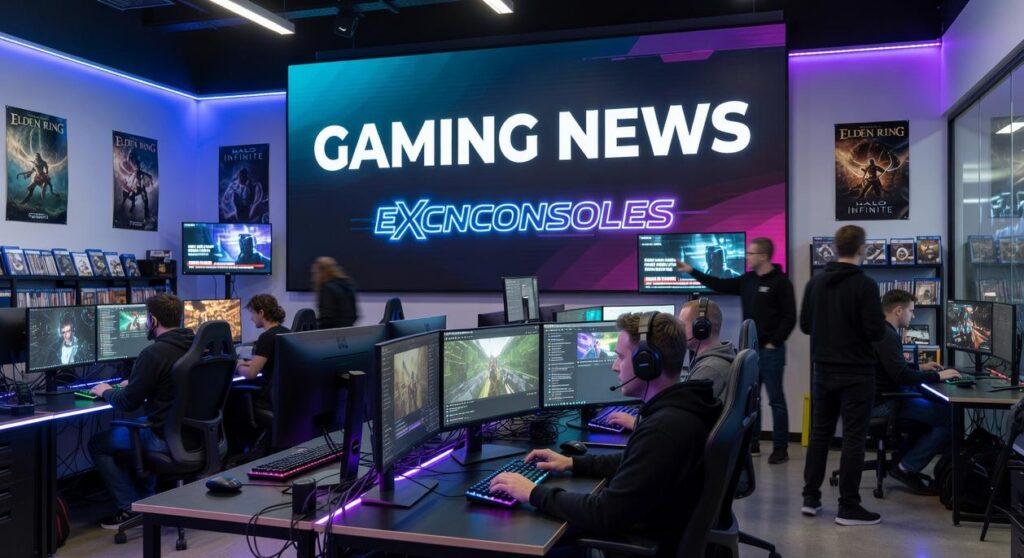
Console makers keep throwing specs at you like they mean something.
You’ve seen the numbers. Teraflops, ray tracing cores, SSD speeds that sound impressive. But what does any of it actually do when you’re holding a controller?
I’ve been digging into what’s really changing in console gaming right now. Not the marketing talk. The stuff that changes how games feel when you play them.
Most coverage focuses on raw power. That’s only part of the story.
I spent weeks reviewing hardware specs, watching developer talks, and reading through patent filings from the big players. The real advances aren’t always what gets the loudest hype.
This article breaks down the tech that matters. I’ll show you which features actually change your gameplay and which ones are just incremental updates with fancy names.
Gaming news excnconsoles tracks these developments as they happen. We look at what developers are building with this tech, not just what the spec sheets promise.
You’ll learn what’s cutting your loading times, what’s making worlds feel more real, and what’s coming that will change how you play.
No jargon dumps. Just the tech that impacts the games you’re actually going to play.
The AI Revolution in Graphics: Smarter, Not Just Stronger, GPUs
We’ve been doing this wrong for years.
The whole industry kept pushing for bigger numbers. More teraflops. More cores. More raw power.
But here’s what nobody talks about.
That approach hit a wall. You can only cram so much silicon into a console before physics (and your wallet) say no.
I’ve watched this shift happen in real time. GPU makers stopped asking “how much power can we add?” and started asking “how can we work smarter?”
The answer? AI and Machine Learning.
Now some people will tell you this is just marketing speak. That real gamers need real hardware power, not software tricks. They say AI upscaling is fake performance that doesn’t count.
I used to think that too.
But then I saw what DLSS and FSR actually do on consoles. These aren’t gimmicks. They’re game changers (pun intended, but it’s true).
Here’s how it works. Instead of your GPU grinding through every single pixel at 4K, AI steps in. It renders at a lower resolution and then intelligently fills in the gaps. The result? You get 4K quality without needing a GPU that costs more than your rent.
What does this mean for you?
You can play games at 60 FPS in 4K with ray tracing turned on. Something that would’ve required a $2,000 PC two years ago now runs on your console.
Take Spider-Man 2 on PS5. Ray traced reflections in every puddle and window. Smooth performance. No stuttering. That’s AI doing the heavy lifting while your GPU handles what it does best.
According to gaming news excnconsoles, frame rates improved by up to 40% in some titles using FSR 2.0 compared to native rendering.
The real benefit? Your console doesn’t become outdated as fast. Developers can push visual quality higher without waiting for new hardware.
But we’re just getting started.
AI isn’t stopping at upscaling. Next up? NPCs that actually react like real people. Game worlds that generate content on the fly based on how you play. Physics that don’t tank your frame rate when things explode.
The future isn’t about MORE power. It’s about SMARTER power.
And honestly? That’s way more interesting than just adding another zero to the spec sheet.
Sensory Overload: The Evolution of Haptics and 3D Audio
Remember when your controller just buzzed?
That was it. One setting. On or off.
Now your hands can feel the difference between walking on gravel and stepping through mud. That’s not an exaggeration. Modern haptic feedback has come a long way from the rumble packs we grew up with.
Think of it like this. Old vibration was like someone tapping your shoulder to get your attention. Modern haptics? That’s like feeling the actual texture of what you’re touching through a glove.
When you draw a bow in a game now, you feel the tension build in the triggers. Raindrops hit your character and you sense each impact differently. It’s not just feedback anymore. It’s information your hands can read.
But here’s where it gets interesting.
3D audio has made the same jump. And I mean the kind that makes you turn around in real life because you swear someone just walked up behind you.
The Tempest Engine and Dolby Atmos for Gaming don’t just make things louder or quieter based on distance. They place sounds in actual space around you. Footsteps above you sound different than footsteps below. A gunshot to your left rear has a distinct position you can pinpoint without looking.
It works like echolocation for gamers (minus the whole bat thing).
Developers aren’t treating these as bonus features anymore either. According to gaming news excnconsoles, studios are building core mechanics around haptic and audio cues. You’re meant to feel the difference between weapon types. You’re supposed to hear exactly where threats are coming from.
Some people argue this is just fancy tech that doesn’t change gameplay.
They’re wrong.
In competitive multiplayer, hearing an enemy reload behind a wall gives you seconds to react. Feeling the subtle vibration pattern that signals low health can save your life when you’re too focused on aiming to check your HUD.
That’s not a gimmick. That’s a real advantage.
Your brain processes touch and sound faster than it processes visual information on screen. When excnconsoles gaming news by eyexcon covers pro players, they talk about this constantly. The best players aren’t just watching. They’re listening and feeling.
The gap between players who use these features and those who don’t? It’s measurable now.
The Death of the Loading Screen: Next-Gen Storage and I/O
I still remember the first time I fast traveled in Spider-Man: Miles Morales on PS5.
I hit the button expecting to grab my phone for the usual 30-second wait. But before I could even look down, Miles was already swinging through a completely different part of New York.
No loading bar. No tips screen. Just instant.
That’s when it hit me. Something fundamental had changed.
Now, some people will tell you it’s all about the SSDs. That slapping in faster storage solved everything. And sure, the custom NVMe drives in these consoles are quick. But that’s only half the story.
The real breakthrough? It’s in how data moves through the system.
The Pipeline That Changed Everything
Think about older consoles for a second. Data had to travel from the hard drive to RAM, then get processed by the CPU before finally reaching the GPU. Every step created a bottleneck (kind of like waiting in line at three different checkpoints just to get into a concert).
DirectStorage on Xbox and the PS5’s I/O Complex changed that completely. They let game assets stream straight from the SSD to the GPU. The CPU barely touches the data anymore.
What does that actually mean for you? Games can pull in massive amounts of detail on the fly without stuttering or pausing.
But there’s another piece that makes this work. Hardware-based decompression. The PS5 uses something called Kraken that unpacks compressed files at ridiculous speeds. Developers can now store way more data in smaller packages, which means faster loading and bigger worlds.
According to which web browser is best for mac excnconsoles and other gaming news excnconsoles sources, these compression rates can hit 10:1 or better in some cases.
The result? You get instant fast travel like I mentioned. You get seamless transitions when you walk through doors or enter new areas. No more texture pop-in where buildings load in blurry and slowly sharpen up.
Just smooth, uninterrupted gameplay.
That loading screen you used to tolerate? It’s gone. And honestly, I don’t miss it one bit.
The Hybrid Future: How Cloud is Enhancing the Console, Not Replacing It
Everyone keeps asking the wrong question.
Cloud or console?
That’s not how this plays out. I’ve watched this industry long enough to know when we’re looking at a false choice.
Here’s what I think happens instead.
Cloud Becomes Your Console’s Best Friend
Your PlayStation or Xbox doesn’t disappear. It gets smarter.
The cloud handles the heavy lifting (massive physics calculations, weather systems that span entire continents, AI that actually thinks). Your console focuses on what it does best: pushing pixels to your screen at 120fps with zero lag.
Some people say this won’t work. They point to streaming failures and say gamers will never accept anything but local processing.
Fair point. We’ve seen plenty of cloud promises fall flat.
But they’re missing what’s actually happening. This isn’t about replacing your hardware. It’s about making it better.
I’m seeing early builds where you can stream a game demo INSTANTLY while the full version downloads in the background. Or start playing on your console, then pick up exactly where you left off on your phone during lunch.
Not through some clunky workaround. Just seamless.
What This Means for You
| Feature | Traditional Console | Hybrid Model |
|———|——————-|————–|
| Game World Size | Limited by local RAM | Practically unlimited |
| Load Times | 30-60 seconds | Near instant |
| Device Flexibility | Console only | Console + mobile + PC |
You get game worlds that would melt current hardware. Cities with actual populations. Ecosystems that run whether you’re watching or not.
And you still get that crisp, responsive feel that makes console gaming what it is.
Check gaming news excnconsoles and you’ll see developers already testing this approach. They’re not abandoning consoles. They’re supercharging them.
A Smarter, Faster, and More Immersive Era of Gaming
We’ve walked through the four pillars that define modern consoles.
AI-driven graphics that adapt in real time. Sensory immersion that pulls you deeper into the experience. Loading times that have vanished completely. And cloud integration that works with your hardware instead of replacing it.
You came here to cut through the marketing speak. Now you can see what’s actually changing.
These aren’t small upgrades. They’re reshaping how developers build games and how you experience them. Virtual worlds feel more alive because the technology finally supports that vision.
The real shift is happening where local power meets cloud intelligence. That combination is opening doors we haven’t seen before.
Here’s what matters now: You understand the tech that’s driving this generation forward. You can make informed decisions about what you play and how you play it.
gaming news excnconsoles tracks these developments because they matter to how you game. The industry keeps moving and we keep you informed.
The next leap in interactive entertainment is already taking shape. Stay informed and you’ll see it coming.
 Yryvox Frost is the founder of ExcNConsoles.com, a platform dedicated to the technical and strategic depths of the gaming world. With a focus on game design quality and competitive excellence, Frost has built a space that bridges the gap between casual play and professional insight. By exploring gamer motivation and advanced industry concepts, he continues to shape ExcNConsoles into an essential hub for those looking to master the latest trends in interactive entertainment.